
Ship-to GSTIN & E-Way Bill FAQs Guide 2026 India
-
 By Ankita Chaturvedi
-
GST Notice
- Jul 02, 2026
- 3 minutes read
-
806 Views
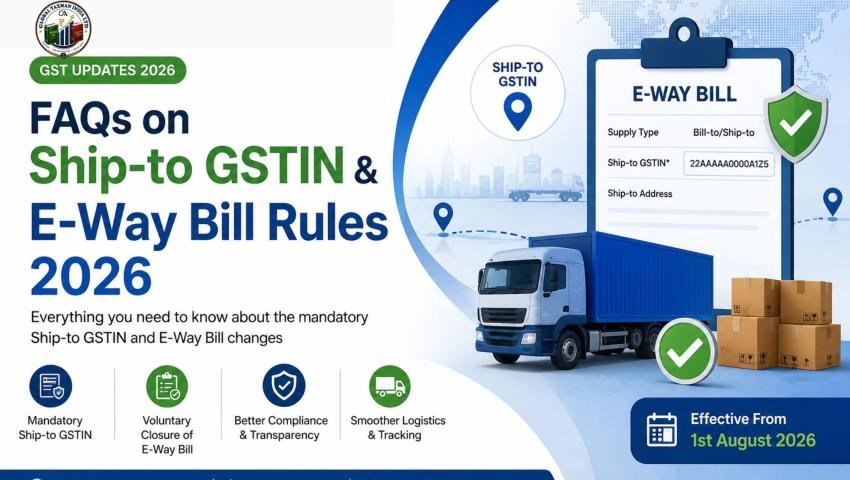
The GST Network has announced some updates that will start from 1st August 2026. These updates include the capture of Ship-to GSTIN in certain transactions and new guidelines for the e-Way Bill system. This is done to make things more transparent help businesses follow the rules and make it easier to track the movement of goods across India.
At Global Taxman India we know that businesses need simple guidance to follow the GST rules. So we have answered the frequently asked questions about these new requirements.
What is the Mandatory Ship-to GSTIN Requirement?
The new GSTN guidelines say that businesses must provide the Ship-to GSTIN in transactions. This is when the consignee is a taxpayer. If the consignee is not registered businesses can enter "URP" where it is needed.
This new rule helps to track goods easily and makes it simpler for tax authorities to check transactions.
Which Transactions Require Ship-to GSTIN?
Ship-to GSTIN is required for transactions, such as:
* Bill-to/Ship-to Transactions
* Combination Transactions, which include Bill-to/Ship-to with Bill-from/Dispatch-from
However it is not needed for:
* Regular Transactions
* Bill-from/Dispatch-from Transactions
Businesses should be careful to identify the type of transaction before generating an e- Bill.
Why Has GSTN Introduced This Change?
The main goal of this change is to make GST compliance stronger by:
* Improving the records of transactions
* Reducing errors in reporting
* Making it easier to track the movement of goods
* Preventing the misuse of e- Bills
* Helping authorized officers to verify transactions
These steps will make the GST system more transparent and efficient.
Will Ship-to GSTIN Be Visible on the e- Bill?
No the Ship-to GSTIN will not be printed on the e- Bill or shown through the GET e-Way Bill APIs. This is to protect confidentiality. Authorized government officers will be able to see it for verification purposes.
How Are Export Transactions Treated?
For export-related transactions where there is no registered Ship-to GSTIN businesses should enter "URP" where needed. They should also mention the Indian export-linked destination, such as a port or airport in the Ship-to address and PIN code fields.
What Should Businesses Do Before August 2026?
To make the transition smooth businesses should:
* Update their ERP and accounting software
* Capture Ship-to GSTIN where needed
* Check customer and consignee master data
* Complete API and Sandbox testing
* Train their logistics, accounts and GST compliance teams
By preparing in advance businesses can minimize disruptions when the new rules start.
How Can Global Taxman India Help?
At Global Taxman India our GST professionals can assist businesses with GST compliance, e-Way Bill management, ERP readiness, tax advisory, GST registrations return filing and regulatory updates. We help organizations implement the GSTN requirements efficiently while reducing compliance risks.
Conclusion
The mandatory capture of Ship-to GSTIN is a step towards improving Indias GST compliance framework. Businesses that update their systems and processes before the implementation date will be better prepared to avoid errors ensure logistics operations and remain fully compliant with GST regulations.
For expert GST consultation and compliance support trust Global Taxman India to keep your business ready, for every update.
-
By Ankita Chaturvedi
- GST Notice
- Jul 02, 2026
- 3 minutes read
- 806 Views
The GST Network has announced some updates that will start from 1st August 2026. These updates include the capture of Ship-to GSTIN in certain transactions and new guidelines for the e-Way Bill system. This is done to make things more transparent help businesses follow the rules and make it easier to track the movement of goods across India.
At Global Taxman India we know that businesses need simple guidance to follow the GST rules. So we have answered the frequently asked questions about these new requirements.
What is the Mandatory Ship-to GSTIN Requirement?
The new GSTN guidelines say that businesses must provide the Ship-to GSTIN in transactions. This is when the consignee is a taxpayer. If the consignee is not registered businesses can enter "URP" where it is needed.
This new rule helps to track goods easily and makes it simpler for tax authorities to check transactions.
Which Transactions Require Ship-to GSTIN?
Ship-to GSTIN is required for transactions, such as:
* Bill-to/Ship-to Transactions
* Combination Transactions, which include Bill-to/Ship-to with Bill-from/Dispatch-from
However it is not needed for:
* Regular Transactions
* Bill-from/Dispatch-from Transactions
Businesses should be careful to identify the type of transaction before generating an e- Bill.
Why Has GSTN Introduced This Change?
The main goal of this change is to make GST compliance stronger by:
* Improving the records of transactions
* Reducing errors in reporting
* Making it easier to track the movement of goods
* Preventing the misuse of e- Bills
* Helping authorized officers to verify transactions
These steps will make the GST system more transparent and efficient.
Will Ship-to GSTIN Be Visible on the e- Bill?
No the Ship-to GSTIN will not be printed on the e- Bill or shown through the GET e-Way Bill APIs. This is to protect confidentiality. Authorized government officers will be able to see it for verification purposes.
How Are Export Transactions Treated?
For export-related transactions where there is no registered Ship-to GSTIN businesses should enter "URP" where needed. They should also mention the Indian export-linked destination, such as a port or airport in the Ship-to address and PIN code fields.
What Should Businesses Do Before August 2026?
To make the transition smooth businesses should:
* Update their ERP and accounting software
* Capture Ship-to GSTIN where needed
* Check customer and consignee master data
* Complete API and Sandbox testing
* Train their logistics, accounts and GST compliance teams
By preparing in advance businesses can minimize disruptions when the new rules start.
How Can Global Taxman India Help?
At Global Taxman India our GST professionals can assist businesses with GST compliance, e-Way Bill management, ERP readiness, tax advisory, GST registrations return filing and regulatory updates. We help organizations implement the GSTN requirements efficiently while reducing compliance risks.
Conclusion
The mandatory capture of Ship-to GSTIN is a step towards improving Indias GST compliance framework. Businesses that update their systems and processes before the implementation date will be better prepared to avoid errors ensure logistics operations and remain fully compliant with GST regulations.
For expert GST consultation and compliance support trust Global Taxman India to keep your business ready, for every update.
Ankita Chaturvedi
Leave a comment
Your email address will not be published. Required fields are marked *

